The Culture Quarter—A flexible brand and typography system
Brand Identity Design
2022Designing a flexible brand identity for a new economic development to help reach a wider audience.
Project Overview
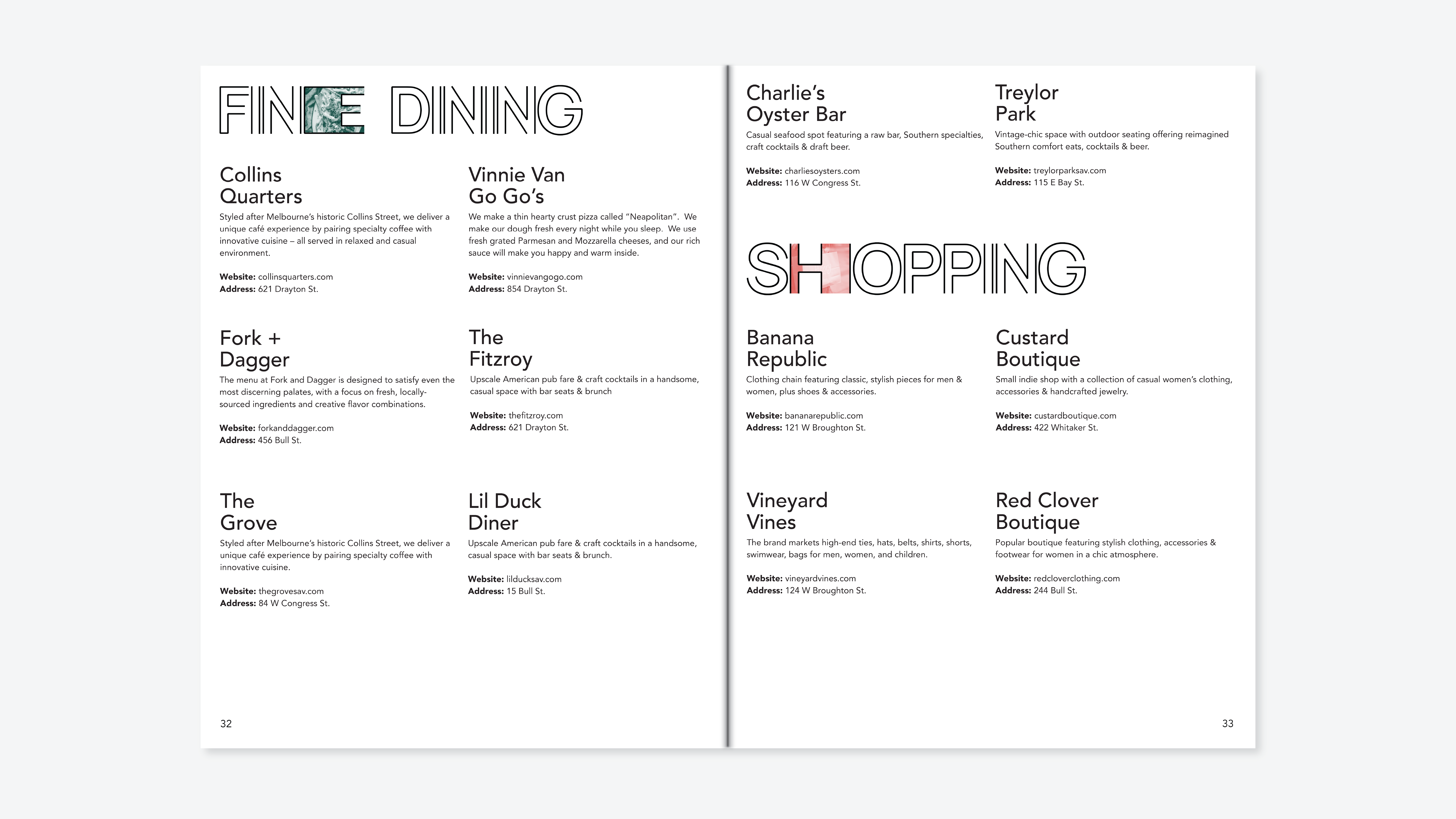
Savannah’s Culture Quarter, the city’s new entertainment district, needed an identity that could connect with its wide audience of students, tourists, and longtime residents without losing its historic character. I created a flexible brand and type system that adapts effortlessly across diverse audiences, events, and media.
A brand that performs across generations and media
Savannah’s Culture Quarter, the city’s new entertainment district, needed an identity that could connect with its wide audience of students, tourists, and longtime residents without losing its historic character. I created a flexible brand and type system that adapts effortlessly across diverse audiences, events, and media.


MoveWise—Scaling a nationwide initiative
Digital Product
LAUNCHED 2025Please note: This case study has been altered due to an NDA.

Helping scale and execute a nationwide physical education program by building en easy-to-use platform that empowers teachers to learn and execute.
Credits:
Benjamin Pape (Lead Developer)
Duo Chen (Visual Designer)
Credits:
Benjamin Pape (Lead Developer)
Duo Chen (Visual Designer)

The Challenge
After a successful pilot of a new physical education program, our partners needed to expand the initiative across thousands of schools nationwide. The challenge? Building a simple, intuitive, and motivating tool that helps teachers—many with limited digital experience—bring more movement into their students’ daily routines.
Turning a pilot program into a nationwide movement
After a successful pilot of a new physical education program, our partners needed to expand the initiative across thousands of schools nationwide. The challenge? Building a simple, intuitive, and motivating tool that helps teachers—many with limited digital experience—bring more movement into their students’ daily routines.


The Opportunity
Transforming a program into a digital ecosystem
We built MoveWise, a user-friendly digital platform that gives teachers the tools and confidence to seamlessly integrate physical activity into their classrooms.
The platform:
Transforming a program into a digital ecosystem
We built MoveWise, a user-friendly digital platform that gives teachers the tools and confidence to seamlessly integrate physical activity into their classrooms.
The platform:
- Offers teacher training and resources
- Houses a library of physical activity guides
-
Includes an AI-powered routine builder
- Provides analytics to track progress across schools and students


Grounding the design in real classroom contexts
With limited time for formal user research, we relied on stakeholder interviews and conversations with teachers to uncover key design considerations that helped guide our design process. We synthetized the feedback and conversation points into two, highly important considerations.
1
Assume low digital literacy
The user interface must be intuitive, simple, and forgiving.
2
Acknowledge competing priorities
The program isn’t a daily focus—so the design should motivate, not add workload.
Turning our insights into an actionable UX and product strategy
Using our design considerations, desk research, and close collaboration with strategists and developers, I synthesized a set of clear UX strategy principles. These actionable guidelines aligned the entire team—from designers to strategists—around interface design, content structure, and overall product direction.
Leverage familiar UX mental models from popular tools.
Break content into digestible, bite-sized pieces.
Sustain teacher engagement by celebrating progress often.
Surface only essential, actionable information, and utilize progressive disclosure.
These guidelines helped us iterate faster and provided a clear framework to evaluate our design and product decisions, utlimately allowing us to move from sketches to MVP in a span of a couple months.

Playful, approachable, human: our design system
We crafted a design system that helped the user experience feel approachable, energizing, and fun.
- Bright, energetic color palette
- Nunito sans: a highly legible, neo-grotesque typeface with humanist qualities and features.
- Rounded corners and soft elevations.
- Modular, scalable components for future content additions


Real impact with measurable change
35% increase in average student activity
After rollout, schools using the platform saw a 35% increase in average student activity, surpassing the WHO’s daily recommendation of 60 minutes.
The platform not only scaled the program efficiently but also re-energized teachers and students alike—making movement an everyday norm.
#bravehood—Motion that harmonizes
Motion Design System
LAUNCHED 2022Designing a motion design system for the visual identity of a charity campaign.
Credits:
Szenario Design
Credits:
Szenario Design

Project Overview
Szenario Design developed the visual identity for #bravehood, a charity campaign supporting children in Ukraine through merchandise featuring donated lyrics from global musicians. I was brought in to create a motion system that extended the brand across digital platforms, amplifying its message of individuality and collective support through movement.
Making solidarity move
Szenario Design developed the visual identity for #bravehood, a charity campaign supporting children in Ukraine through merchandise featuring donated lyrics from global musicians. I was brought in to create a motion system that extended the brand across digital platforms, amplifying its message of individuality and collective support through movement.

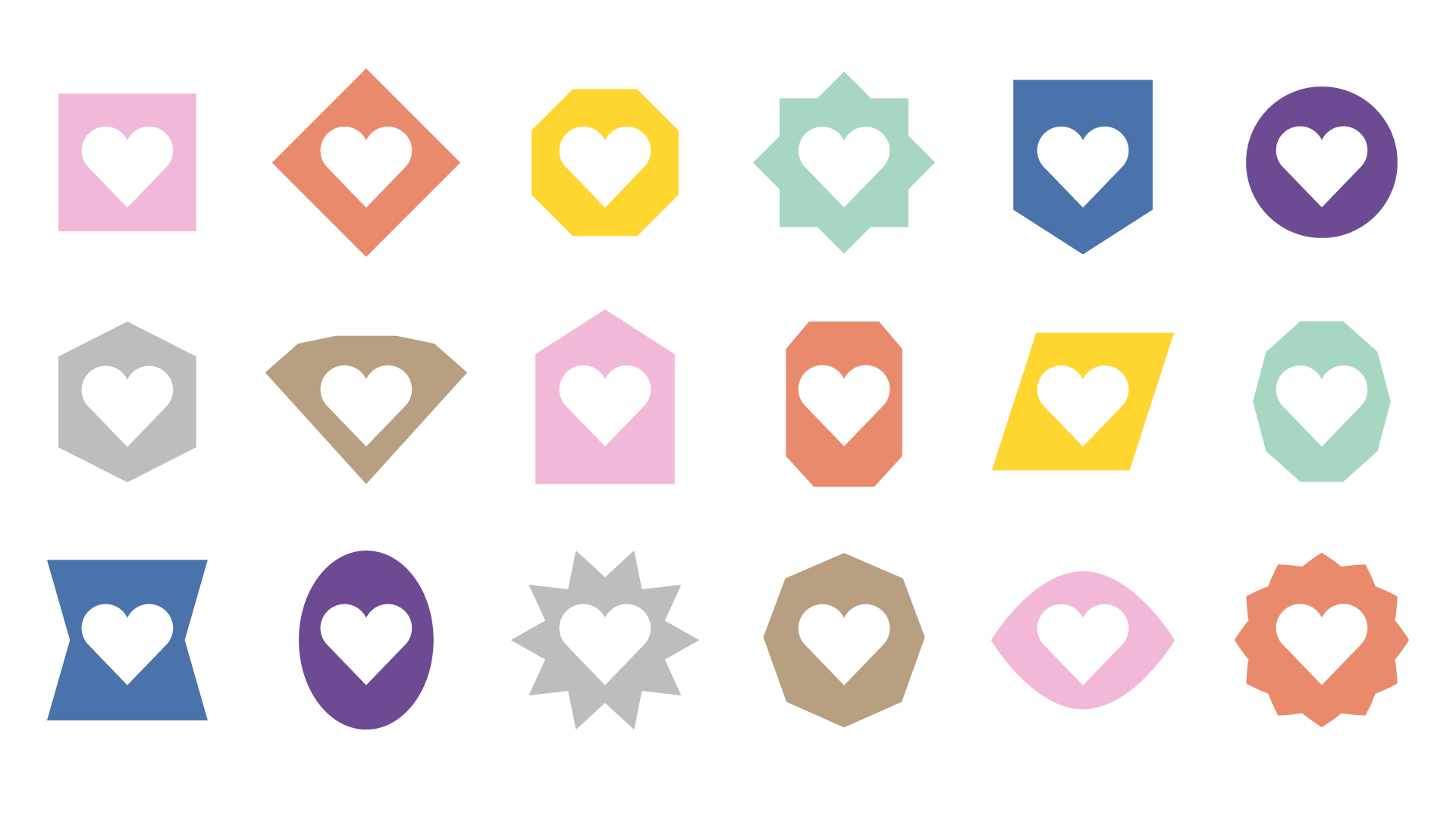
Overview of #bravehood branded merch, designed by Szenario Design
Suite of Animations
Each heart icon was animated with a unique motion shaped by its form—round, sharp, simple, or abstract—celebrating expressive individuality.
Celebrating individuality
Each heart icon was animated with a unique motion shaped by its form—round, sharp, simple, or abstract—celebrating expressive individuality.

Motion Behavior #1
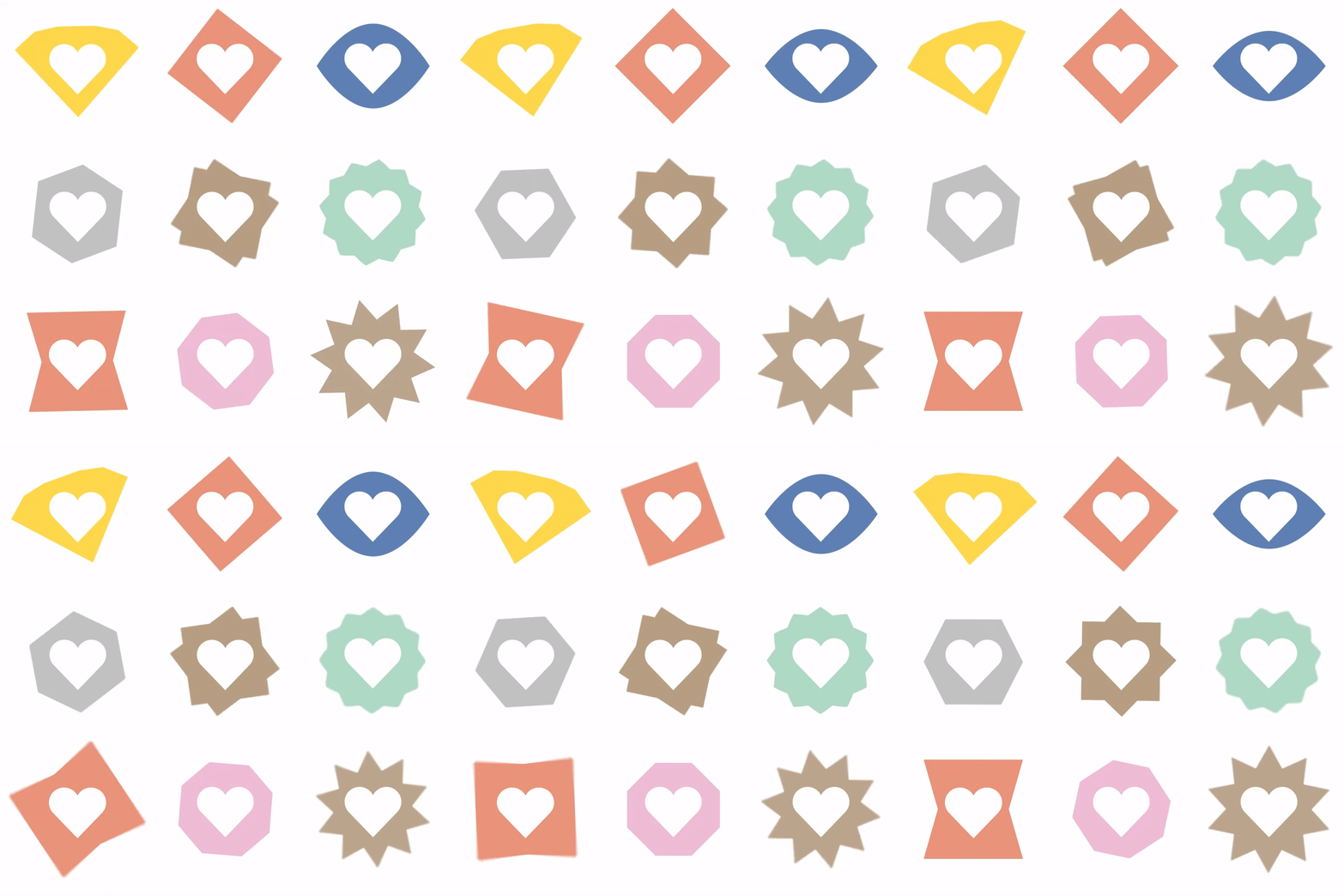
To reflect a sense of unity, I created a cascading sequence where one heart begins moving and the others gradually follow, evoking the spark of collective action.
Collective movement
To reflect a sense of unity, I created a cascading sequence where one heart begins moving and the others gradually follow, evoking the spark of collective action.
Motion Behavior #2
A looping color-swap rhythm added subtle motion and reinforced the campaign’s musical roots.
Dancing colors
A looping color-swap rhythm added subtle motion and reinforced the campaign’s musical roots.
Additional Deliverables
Animated ad banners
Pluralsight—Designing for an elusive audience
Brand Campaign
LAUNCHED 2023
Designing various digital touchpoints for a global advertising campaign.
My contributions:
UX & Product Strategy
User Interface Design
Graphic Design
Credits:
Stefan Hajek (Executive Creative Director)
Patrick Halferty (Creative Director)
David Walsen (Creative Direction)
Veda Nagpurkar (Senior Designer)
Jaime Diskin (Senior Strategist)
Ellen Hafer (Senior Designer)
Scout Shannon (Senior Copywriter)
Kevin Zwier (Senior Copywriter)
Julianne Anderson (Senior Copywriter)
Kin Lok (Designer)
My contributions:
UX & Product Strategy
User Interface Design
Graphic Design
Credits:
Stefan Hajek (Executive Creative Director)
Patrick Halferty (Creative Director)
David Walsen (Creative Direction)
Veda Nagpurkar (Senior Designer)
Jaime Diskin (Senior Strategist)
Ellen Hafer (Senior Designer)
Scout Shannon (Senior Copywriter)
Kevin Zwier (Senior Copywriter)
Julianne Anderson (Senior Copywriter)
Kin Lok (Designer)

The Problem
How do you authentically reach one of the toughest audiences in marketing — developers? That was the challenge when Designit was approached by Pluralsight, a tech-skills training platform. The tech community notoriously hates traditional advertising — like, really hates it.
To break through, Designit created a two-season mockumentary series that was both ridiculous and relatable. The campaign became Pluralsight’s most successful to date.
After the first season built strong brand awareness, our next goal was to convert that audience into customers and drive deeper engagement. I contributed as part of the design team, focusing on the landing page, social media assets, and web advertisements.
An ever-elusive tech audience
How do you authentically reach one of the toughest audiences in marketing — developers? That was the challenge when Designit was approached by Pluralsight, a tech-skills training platform. The tech community notoriously hates traditional advertising — like, really hates it.
To break through, Designit created a two-season mockumentary series that was both ridiculous and relatable. The campaign became Pluralsight’s most successful to date.
After the first season built strong brand awareness, our next goal was to convert that audience into customers and drive deeper engagement. I contributed as part of the design team, focusing on the landing page, social media assets, and web advertisements.

Landing page components overview
Our Approach
To turn awareness into action, we led with a direct, bold, and value-first strategy. We amplified dramatic, comical photography from the mockumentary, paired it with strong, relatable copy, and surfaced key statistics across web and social channels. The goal: make developers feel seen, not sold to.
Heroing relatable copy and value propositions
To turn awareness into action, we led with a direct, bold, and value-first strategy. We amplified dramatic, comical photography from the mockumentary, paired it with strong, relatable copy, and surfaced key statistics across web and social channels. The goal: make developers feel seen, not sold to.

Redesigned card layout


A mobile-first design approach

Instagram posts


Google advertisements
Redesigning for engagement
Working closely with web analysts, we discovered an unexpected pattern — users were clicking on videos lower on the page, skipping the more valuable content at the top.
To fix this, we redesigned the card layouts to include stronger contextual framing, clearer value propositions, and more direct calls to action. This helped guide viewers to the most relevant and valuable episodes first.


Responsive card design

The results?
2.2M clicks, 1.01M page sessions, and 703M impressions.
Our designs helped Pluralsight reach new heights, transforming brand awareness into measurable engagement and growth.
StrategyOS — A system for strategy at scale
Digital Product
LAUNCHED 2024Please note: This case study has been altered due to an NDA.
DashboardCollaborating with a Fortune 500 car company to build from 0-1 an internal brand strategy platform.
What we did:
UX & Product Strategy
Design System
User Interface Design
Credits:
Benjamin Pape (Lead Developer)
Louis Elton (Director of Strategy)
John Sheperd-Smith (Senior Strategist)
Eve Farah (Strategist)
What we did:
UX & Product Strategy
Design System
User Interface Design
Credits:
Benjamin Pape (Lead Developer)
Louis Elton (Director of Strategy)
John Sheperd-Smith (Senior Strategist)
Eve Farah (Strategist)


Responsive design for mobile
The Problem
A global strategy team at a Fortune 500 car company spent over a year developing a brand strategy for a new luxury brand. The result was extensive research — but it lived across disconnected decks, documents, and teams.
The fragmentation made it hard to find insights, align across functions, and scale the work as the brand grew. They needed a system that made research easy to access, simple to understand, and built for collaboration under rapid growth.
A scattered strategy
A global strategy team at a Fortune 500 car company spent over a year developing a brand strategy for a new luxury brand. The result was extensive research — but it lived across disconnected decks, documents, and teams.
The fragmentation made it hard to find insights, align across functions, and scale the work as the brand grew. They needed a system that made research easy to access, simple to understand, and built for collaboration under rapid growth.

Timeline visualization
The Opportunity
We built a streamlined internal database from the ground up, transforming scattered research into a single, easy-to-use hub. The platform organizes and beautifully displays content from global research and strategy teams, making insights clear, accessible, and ready to grow with the brand.
Making strategy accessible and scalable
We built a streamlined internal database from the ground up, transforming scattered research into a single, easy-to-use hub. The platform organizes and beautifully displays content from global research and strategy teams, making insights clear, accessible, and ready to grow with the brand.

AI-powered chat interface
Quickly shaping a product strategy
With no time or scope for user research, we ran a stakeholder workshop to explore different interaction metaphors and present early wireframes and prototypes, helping facilitate conversations about problems their team faced, and what sort of experience they were looking for.


From the workshop results, we narrowed our focus on two key aspects that our solution had to include:
1
Reduce cognitive load
Design the content, interactions, and navigation so it’s easy to understand, explore, and engage with.
2
Empower clean and effecient scaling
Brand strategy evolves quickly. Create a flexible yet robust design framework that can adapt to rapid growth and new content.
Providing clarity through thoughtful design
Working closely with strategists and researchers, we built a modular design system with interactive frameworks tailored to the team’s mental models. The system transformed raw data from six global regions into a clear, visually engaging experience.
We emphasized strong text hierarchy and generous use of imagery to keep content accessible, easy to scan, and enjoyable to explore.


Interactions that explain themselves
In presentations, complex models were explained with voice-overs — but once the decks were shared, that context disappeared. Without explanation, many concepts were difficult to grasp.
We applied interaction design principles to make these models clearer, more engaging, and easier to interpret on their own, reducing confusion and misalignment.


Simplified navigation
Strategists often grouped and sorted insights in many different ways. We used familiar UI patterns like segmented controls and filters, along with consistent visual cues, to make navigating the complex database intuitive — without disrupting how teams already thought about their insights.


Empowering scale
Adding and growing information quickly was critical, since research was happening constantly across the globe. We built a lightweight, easy-to-use interface connected to a simple Notion database, enabling teams to add insights directly and efficiently.


The result?
+600 new insights within 3 months.
Within three months of launch, the internal teams added over 600 insights — validating the effectiveness of our modular design system and seamless scaling capabilities.